
EN ISO 16321: What is changing in eye protection – and what companies should know now
The new EN ISO 16321 standard replaces the proven EN 166 for personal eye protection. Learn what changes safety officers can expect and how to manage the transition in practice.
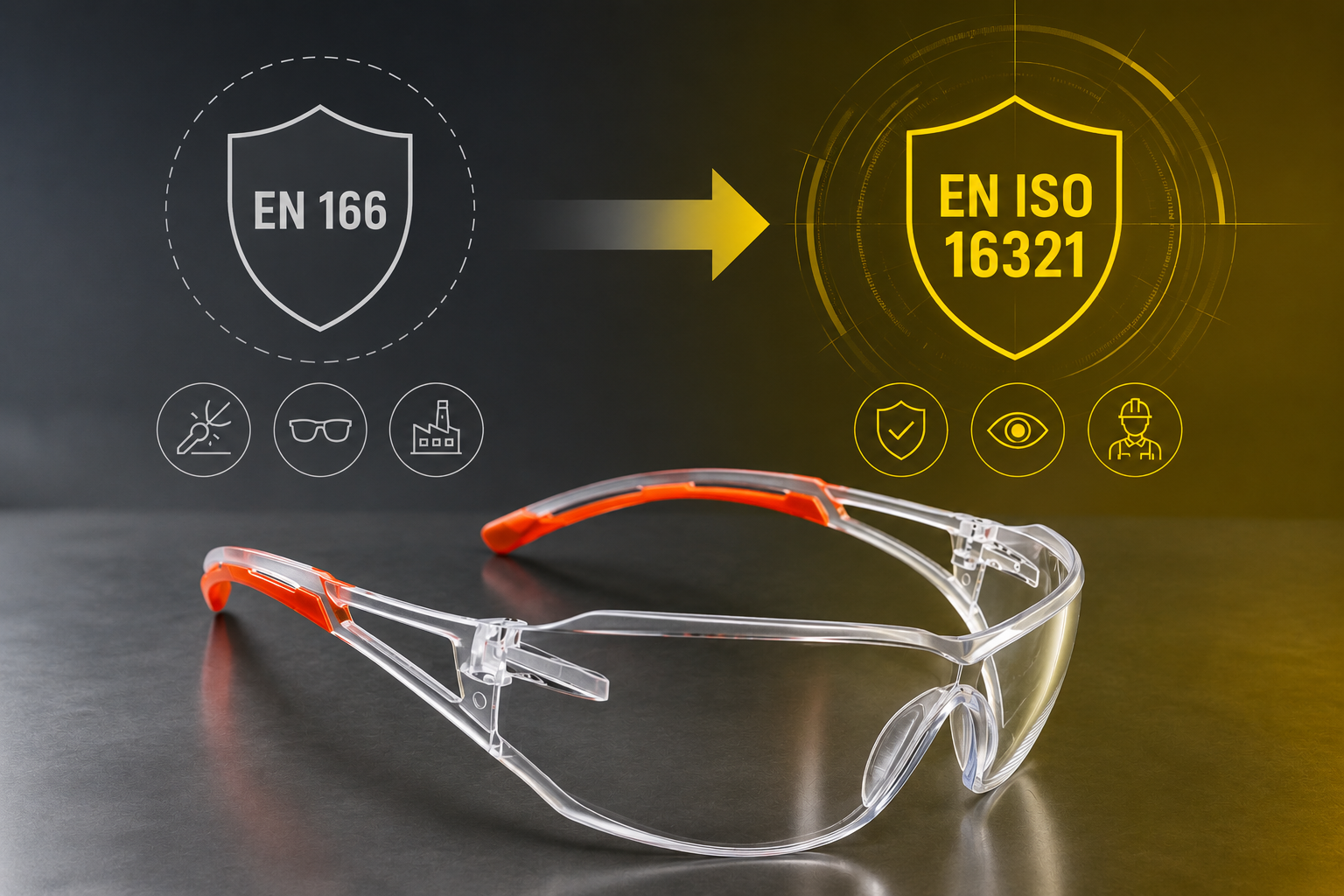
For many years, EN 166 was the central standard for personal eye protection in the workplace. Now, the world of standards is being put on a new footing: EN ISO 16321 is gradually replacing the previous standard.
There is no reason for companies to panic. Nevertheless, now is the right time to familiarize oneself with the changed requirements and markings.
From EN 166 to EN ISO 16321
With the new series of standards EN ISO 16321, testing procedures, safety requirements, and the marking of properties of lenses and frames are changing, among other things.
The transition, however, is by no means abrupt. Products certified according to the previous EN 166 and properly placed on the market may continue to be used. Existing EU type-examination certificates retain their validity within their transition periods.
Does existing eye protection need to be replaced immediately?
No, there is no general obligation to replace. The introduction of a new standard does not automatically make existing safety glasses unsafe or impermissible.
The date of placing on the market and the validity of the certificates are crucial for continued use. Safety officers should check with their PPE supplier which deadlines apply to the models in use.
New markings for practical use
Those who procure safety glasses are familiar with abbreviations such as F, K or N for mechanical strength or anti-fog properties. With EN ISO 16321, this system will be gradually adapted.
For purchasing, this means that previous order designations can no longer be blindly adopted in the future. The selection must again be increasingly guided by the actual risk assessment.
A standard alone does not guarantee protection
The safest safety glasses are of little use in everyday work if they are not worn by employees. A sustainable protection concept must therefore combine various requirements:
- Protective effect: Precisely matched to the risks at the specific workplace.
- Fit: Ergonomic fit for high wearing acceptance.
- Optical quality: Undistorted vision and the right solution for refractive errors.
- Process integration: Smooth processes for procurement and adjustment.
This demand is particularly evident in the provision of corrected safety glasses: The solution must combine standard-compliant protection with optical precision. At UNICO Graber, we therefore always consider eye protection holistically and tailored to the respective workplace.
What companies should do now
The standard change provides an ideal opportunity to review the company's PPE supply. The following questions help with preparation:
- Inventory: Which safety glasses are currently in use in the company?
- Requirements profile: Are the risks of the individual workplaces currently documented?
- Vision correction: Is the supply for spectacle wearers with corrected eye protection structured and regulated?
- Transition plan: Has it been clarified how to switch to products according to EN ISO 16321 in the future?
Conclusion and further information
The goal of the standard change is not the hasty replacement of functioning protective equipment, but rather forward-looking planning. Detailed information on the new markings and testing procedures can be found in our comprehensive guide on unicograber.com.
We would be happy to support you in implementing the requirements of EN ISO 16321 in a practical way in your company – from on-site analysis to individual safety eyewear provision.