
No more fogged safety glasses? What a new study promises
Fogged safety glasses impair vision and jeopardize wearer acceptance in occupational safety. A new study shows promising approaches for durable anti-fog coatings – but what does this mean for practical application?
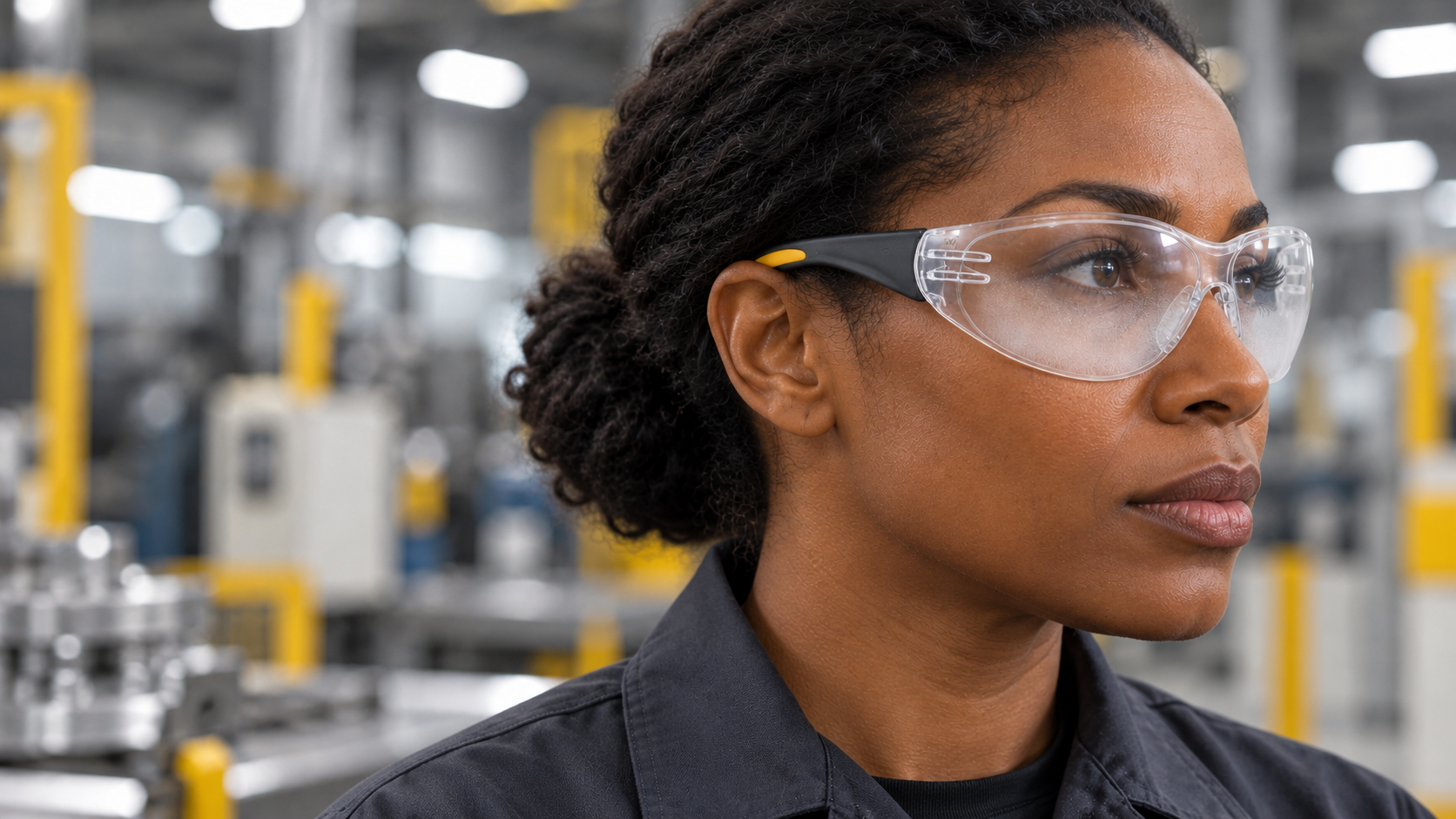
Changing from cold halls to warm production areas, physical exertion, or combination with respiratory masks: Fogged safety glasses are a significant safety risk in daily work. When vision is obscured, employees tend to remove their glasses – precisely where eye protection is most urgently needed. New research now presents an innovative approach for permanently clear vision.
New Anti-Fog Coating from Research
A research team from Shenzhen University presented a novel anti-fog coating in the journal Small (January 2026). The principle combines two functions: The layer absorbs moisture and, when moistened, distributes the water extremely quickly – within just 2.5 milliseconds in tests. This prevents a light-scattering sea of droplets, instead creating a wafer-thin, uniform film of water for unobstructed vision.
The study also shows good results in terms of stability: The anti-fog effect withstood accelerated laboratory aging tests for over 60 days at 85 °C and 100 percent relative humidity. Nevertheless, it is important to note: Such laboratory tests provide valuable insights, but a concrete service life in demanding daily work cannot yet be directly derived from them.
Why Fog-Free Vision is Crucial for Occupational Safety
Safety glasses only offer reliable protection if they are consistently worn. Investigated practical cases (for example, in mining) have long shown that fogged lenses are the main reason for a lack of wearer acceptance.
- Ensure safety: A reliable anti-fog effect prevents dangerous interruptions to vision.
- Increase wearing comfort: Reduced cleaning effort makes it easier to wear the glasses continuously.
- Secure productivity: Fewer work interruptions ensure smooth operations in the company.
From Laboratory Result to Usable Safety Glasses
A successful lab test is a promising development step, but it does not replace certified safety glasses with series availability. Before new technology can be used in industry, practical questions must be clarified:
- Cleaning and abrasion: How does the coating behave with repeated cleaning and typical soiling?
- Optical quality: Does clear vision remain even after months of use?
- Material compatibility: On which lens materials and geometries does the process work?
- Prescription glasses: How can the coating be optimally integrated into prescription safety glasses?
Especially with prescription safety glasses, the interaction is crucial: lens material, individual correction, frame, and coating must together form a functional solution.
What Companies Can Do Today Against Fogged Lenses
Companies do not have to wait for future technologies to solve existing vision problems. If you regularly deal with fogged safety glasses in your company, you should analyze the specific operating conditions:
- Assess operating conditions: Check whether fogging is caused by temperature changes, high humidity, or physical work.
- Coordinate PPE combination: Eye protection, respiratory protection, and safety helmet should be considered together during selection.
- Optimize fit: A suitable solution must cover both the hazard and the requirements of the workplace.
- Manufacturer-compliant care: The manufacturer's care instructions are decisive. Independently applied agents are not a blanket solution for coated safety lenses.
- Conduct wearing tests: A wearing test under real working conditions helps to assess the suitability of the glasses and incorporate employee feedback.
Conclusion: Practical Benefit Decides in Everyday Work
The presented study addresses a central problem. However, for effective occupational safety, the benefit in daily operations ultimately decides: Do employees see reliably, do the safety glasses fit well, and are they consistently worn?
Are fogged safety glasses a recurring issue in your company? UNICO Graber supports you in assessing your operating conditions and finding the right solution for PPE and prescription eye protection.
Scientific source: Chen et al. (2026), «Self-Adaptive Absorption-Superspreading Coating for Environment Endurable and Long-Lasting Antifogging Applications», Small.